
Bible Reading: Luke 4:1-13 – The Temptation of Jesus
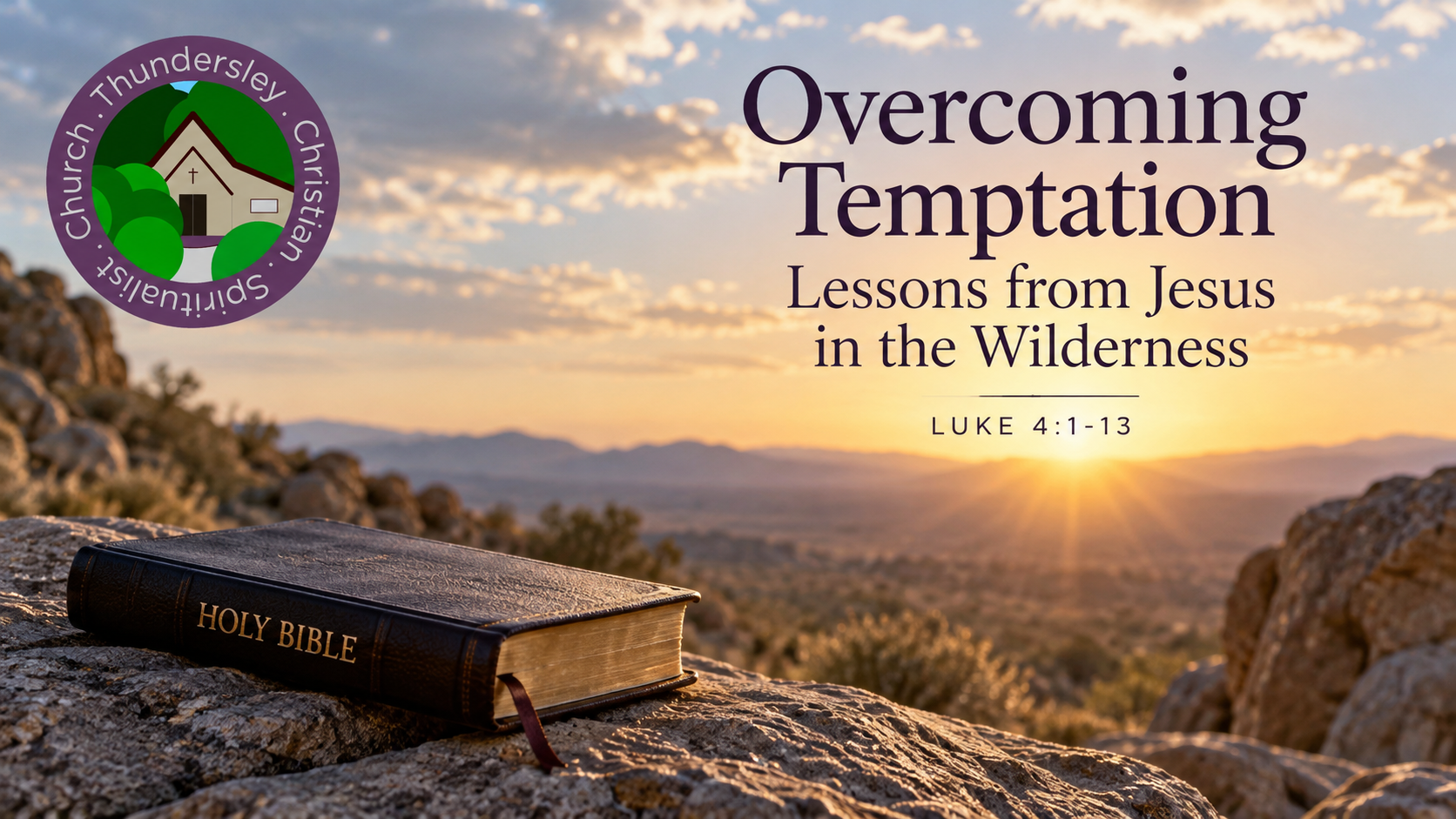
At our Divine Service this Sunday, my reading was from Luke 4:1-13, which tells us about the temptation of Jesus in the wilderness.
For me, this passage is about one of the biggest lessons we are here to learn: how we recognise and overcome temptation in its many different forms.
Jesus Christ became flesh and lived amongst us, bringing light so that we might learn from His example and understand spiritual truth. His teachings and actions carried meaning beyond the immediate events described in the Bible. The lessons contained within them can still encourage us to reflect upon our own lives today.
Nothing Jesus did was intended to enhance His own position. His purpose was always directed towards the glory of Father God. This becomes particularly important when we consider what happened during His 40 days in the wilderness.
Jesus Is Tested in the Wilderness
Luke tells us that Jesus, full of the Holy Spirit, left the Jordan and was led by the Spirit into the wilderness. There, for 40 days, He was tempted by the devil. He ate nothing during this time and, naturally, He became hungry.
Jesus was therefore physically at His weakest and most vulnerable when the temptations came.
The first temptation appealed directly to His hunger. The devil challenged Jesus to turn a stone into bread. Jesus answered by referring to Scripture: “Man shall not live on bread alone.”
I think there is a wider lesson here about desire. Hunger itself is natural, but our strong desires for things can sometimes lead us away from what we know to be spiritually and morally right. Temptation often becomes more powerful when it meets something we desperately want or feel that we need.
The Temptation of Power and Greed
The devil then showed Jesus the kingdoms of the world and offered Him authority and splendour if He would worship him.
Jesus refused, answering that we should worship the Lord our God and serve Him only.
This second temptation makes me think about greed, power and the ways in which people can be persuaded to compromise their principles in return for something they want.
We might think of a bribe as an obvious example: offering someone money, influence or some other advantage to persuade them to act dishonestly. But temptation does not always arrive in such an obvious form. Sometimes the promise of status, possessions, recognition or personal advantage can encourage people to act against their conscience.
The important question is whether what we are being offered requires us to compromise what we know to be right.
Do Not Put God to the Test
Finally, the devil took Jesus to Jerusalem and had Him stand at the highest point of the Temple. He challenged Jesus to throw Himself down, quoting Scripture and suggesting that God’s angels would protect Him.
Jesus answered: “Do not put the Lord your God to the test.”
For me, this is another important spiritual lesson. Faith is not about demanding that God prove Himself to us or deliberately putting ourselves into situations where we expect divine intervention.
There is a difference between trusting God and testing God.
Recognising Temptation in Our Own Lives
When I reflect upon this passage, I see three broad themes: desire, power and testing God.
The circumstances of our lives today are very different from those described in Luke’s Gospel, but the underlying challenges remain remarkably familiar. We can still be tempted by what we want, by what others offer us, and by opportunities to put our own interests ahead of what our conscience tells us is right.
As I have said before, these are my own thoughts as I seek to understand the messages contained within the Bible and reflect upon how they relate to life today. Others may understand these passages differently or see greater depth within them.
That is part of the value of reading and reflecting upon Scripture.
When we seek answers to life’s problems, I believe many of those answers can be found by listening to our spiritual and moral conscience, that inner understanding of right and wrong which helps guide the choices we make.
For me, this is part of what we call spiritual truth.
Bible reference: Luke 4:1-13
This article was drafted with Chat GPT AI from a transcript of Peter’s bible reading. Edited by Humans. Featured image created by Chat GPT.