

By Peter
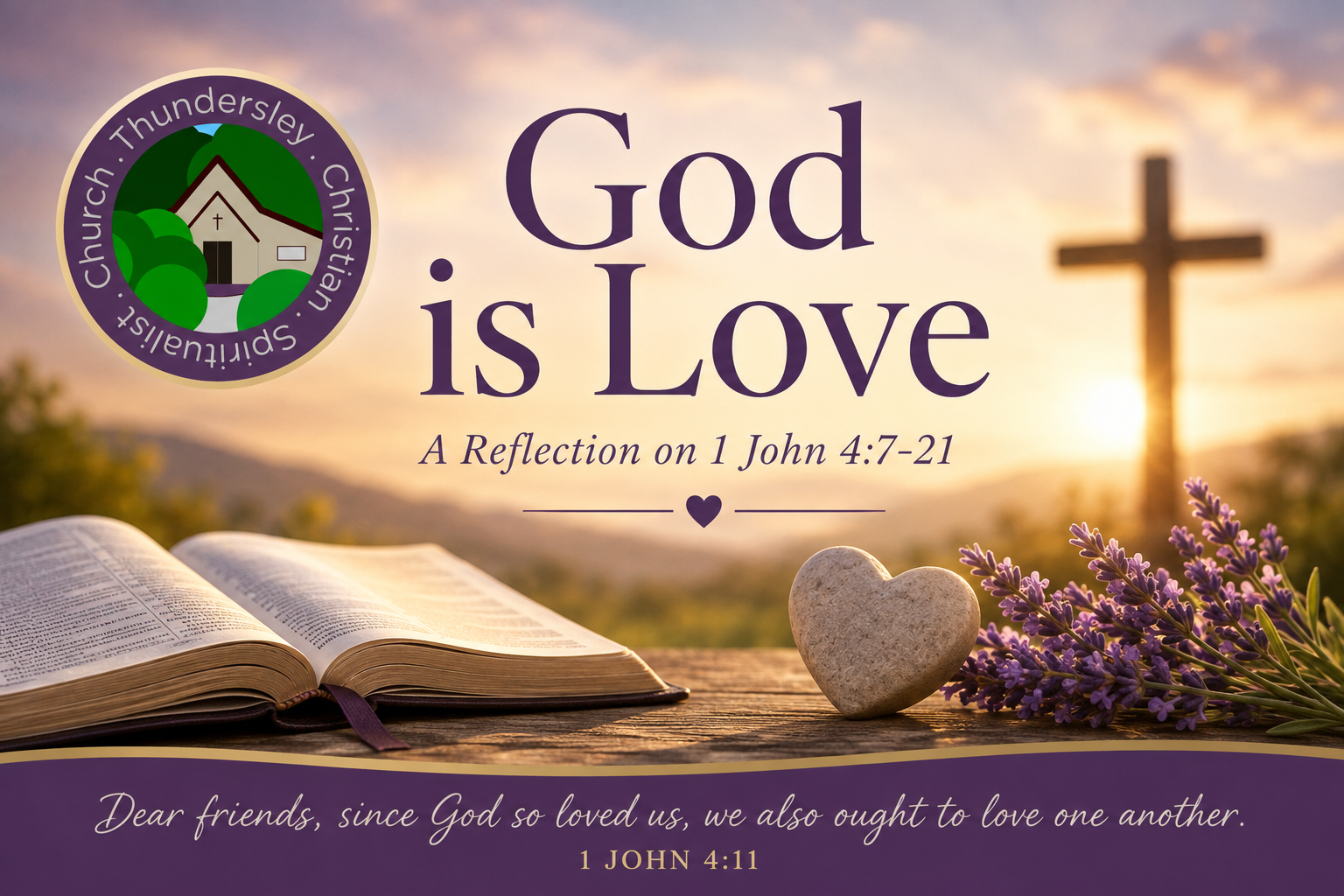
Love is one of the most familiar words in the English language, yet one of the most profound. During this week’s Divine Service, I invited our congregation to reflect on the true nature of love as revealed in 1 John 4:7-21. This passage reminds us that Christian love is not simply an emotion or an attraction. It is a spiritual way of living that reflects the very nature of God.
What Is Spiritual Love?
Love can be expressed in many ways. There is the affection we feel for family and friends, but there is also a deeper, spiritual love that reaches beyond personal relationships.
Spiritual love is about brotherhood, compassion and genuine care for one another. It is selfless rather than self-seeking. One of the finest examples of this is Jesus’ Parable of the Good Samaritan in Luke 10:25-37. The Samaritan had no personal connection to the injured man. He stopped because he recognised another human being in need. His actions demonstrated love through compassion, generosity and mercy.
This is the kind of love that God calls each of us to show every day.
God’s Greatest Gift
As I prepared this reading, I found myself reflecting on what may be God’s greatest gift to humanity, love itself.
God’s love is universal. It reaches across nations, cultures and generations. It embraces every person and extends to the whole of creation. His love is not limited to those closest to us, but encourages us to care for strangers, neighbours and even those with whom we disagree.
Love is revealed not only in what we do, but in how we do it. It shapes our words, our attitudes and our actions. Sometimes a careless comment can wound more deeply than we realise, while a kind word can lift someone’s spirit and bring hope.
Our faith challenges us to ensure that everything we say and do reflects God’s love.
Loving Your Neighbour as Yourself
Jesus taught that the second greatest commandment is:
“Love your neighbour as yourself.”
– Matthew 22:39
This command invites us to pause before we speak or act and ask ourselves a simple question:
Would I want someone to treat me this way?
If the answer is no, then perhaps we need to reconsider our words or actions.
Our speech is particularly important. The tongue has the power to encourage, comfort and heal, but it can also damage relationships and cause lasting hurt. Christian discipleship calls us to become people whose words reflect kindness, patience and grace.
Loving God with All Your Being
The first and greatest commandment is equally important:
“Love the Lord your God with all your heart and with all your soul and with all your mind.”
– Matthew 22:37
This is more than an intellectual belief. It is a wholehearted commitment that embraces every part of our lives. To love God is to honour His presence in creation, appreciate the beauty of the natural world and recognise the value of every person made in His image.
The two great commandments cannot be separated. We cannot claim to love God while neglecting or mistreating those around us. Our relationship with God is reflected in how we treat His children.
Loving All of God’s Creation
The opening chapters of Genesis remind us that after creating the heavens, the earth and every living creature, God declared His creation to be good (Genesis 1:31).
Humanity was created in God’s image and entrusted with the responsibility of caring for creation rather than exploiting it.
Even when we encounter things we may not naturally appreciate, we should remember that they are still part of God’s creation. Our responsibility is not to destroy thoughtlessly but to exercise wise stewardship over the world entrusted to us.
The familiar hymn All Things Bright and Beautiful beautifully captures this truth, reminding us that God’s creative love is woven throughout the whole of creation.
God Is Love
The heart of John’s message is wonderfully simple:
“God is love.”
– 1 John 4:8,16
These three words define God’s character.
God demonstrated that love by sending His Son, Jesus Christ, into the world so that we might know eternal life. His love was not a response to our goodness. It came first. Long before we sought Him, He reached out to us.
John reminds us:
“We love because he first loved us.”
– 1 John 4:19
Our ability to love others is a reflection of the love we have first received from God.
Perfect Love Casts Out Fear
One of the most comforting verses in this passage declares:
“There is no fear in love. But perfect love drives out fear.”
– 1 John 4:18
Fear can hold us back spiritually. It can prevent forgiveness, hinder compassion and stop us from trusting God fully.
As we grow closer to God, His love gradually replaces fear with confidence, hope and peace. We begin to see ourselves, and others, through the eyes of divine love rather than human judgement.
My Final Thoughts
John leaves us with a clear challenge. If we truly love God, that love must be visible in the way we treat other people.
Faith is not measured simply by attendance at church or by knowledge of Scripture. It is demonstrated by kindness, forgiveness, compassion and genuine concern for others.
As Christian Spiritualists, we seek to develop spiritually by allowing God’s love to shape every aspect of our lives. When we live with brotherly love, care for creation and place God at the centre of all we do, we become living witnesses to the greatest truth found in this passage:
God is love.
May we continue to share that love with everyone we meet, allowing it to transform both our own lives and the lives of those around us.
This article was drafted with Chat GPT AI from a transcript of Peter’s bible reading. Edited by Humans. Featured image created by Chat GPT.