

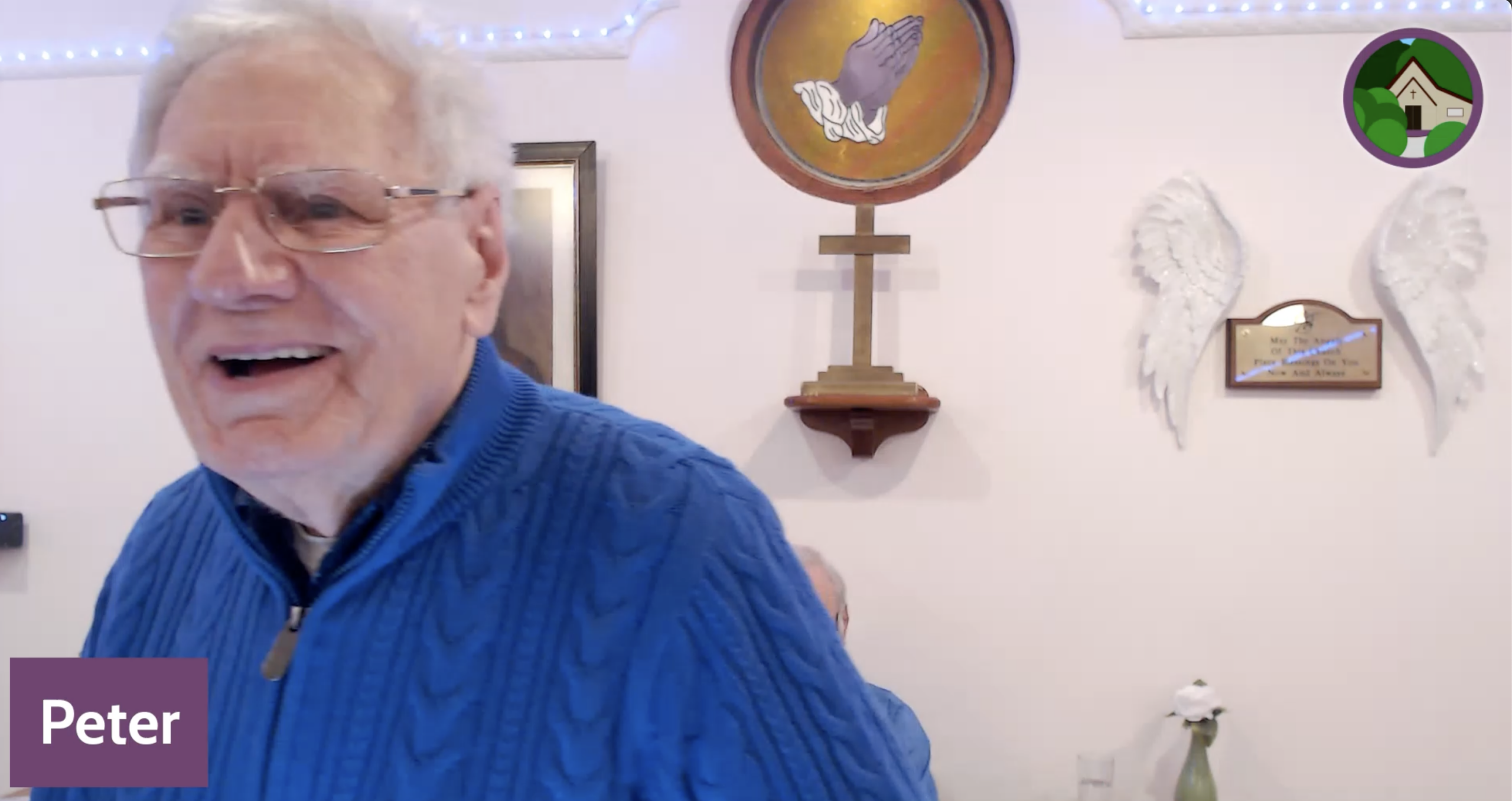
It is always a blessing to see a full church, filled with warmth, fellowship, and shared purpose. We began the evening with a hymn about angels, a reminder that we are never truly alone. They are with us always, offering guidance, comfort, and quiet reassurance. A special welcome was also extended to those joining us online, united in spirit though not in physical space.
The reading this evening spoke directly to an issue that remains deeply relevant today: mental and spiritual wellbeing. Over recent weeks, we have explored many moments of faith within the Bible, reflecting on healing, belief, and our relationship with God. In our church, we practise both hands-on and absent healing. These acts require faith from both the healer and the recipient, and time and again we see that this approach truly works.
Yet this leads to an important and challenging question: what is faith, really? How does it work? How do we know whether we are expressing genuine faith rather than mere hope or desire? And how does healing truly take place?
Last week, we spoke about healing through faith and belief in Christ, who is our living link with God. But understanding this intellectually is one thing; living it is another. How do we make that connection real in our everyday lives? How do we know when that link has truly been made?
When we speak of a “link”, we imply more than one being. In the context of healing, it involves the person seeking healing, the healer, and above all, God, through Jesus Christ. Christ is constant. He never leaves us, never turns away, and never ceases to care. Our role, then, is to meet that constancy with our own commitment: to live, as best we can, in alignment with the teachings and example of Jesus Christ. Thankfully, Christ’s path is also one of forgiveness. Mistakes are not barriers; they are opportunities for growth.
This is where the quiet mind becomes essential. In stillness, we feel God’s love, and it is in that space that the true link is formed.
The reading this evening, from the Gospel of Matthew, offered fresh insight into this idea. It tells the story of the Canaanite woman whose daughter was suffering terribly. At first glance, the exchange between Jesus and the woman can seem difficult to understand. Jesus appears to refuse her, saying he was sent only to the lost sheep of Israel, and that it is not right to take the children’s bread and throw it to the dogs.
But beneath the surface, there is profound spiritual truth. The “lost sheep of Israel” can be understood as those who have lost their spiritual way. The “bread” is not physical sustenance, but the bread of life: spiritual truth itself. When the woman responds that even the dogs eat the crumbs that fall from their master’s table, she reveals a deep understanding of spiritual reality. She recognises that divine truth and blessing are not limited by status, background, or labels.
Jesus sees into her heart. He recognises her faith as genuine, resilient, and rooted in spiritual understanding rather than desperation alone. He grants her request, and her daughter is healed immediately.
This story reminds us that faith is not passive. It is tested, refined, and revealed through perseverance. God sees beyond words and appearances, straight into the heart. True faith lives there, quietly but powerfully, shaping our lives and opening the way for healing, grace, and transformation.
May we remember that faith is not about perfection, but sincerity. Not about entitlement, but trust. And not about outward display, but an inward connection that endures, even when tested.
God bless.