
This week, we reflected on an important message leading us towards Whitsun and the spiritual power of Pentecost. Peter’s reading encouraged us to think deeply about the relationship between faith, action, and spiritual growth.
As Christians and Spiritualists, the Bible remains central to our services, not simply as a historical document, but as a living source of guidance and self-examination. The message shared during the service reminded us that humanity still struggles with many of the same failings seen throughout scripture – ignorance, cruelty, selfishness, and a lack of compassion. The Bible continues to challenge us because its lessons are still relevant today.
The congregation was encouraged not to read scripture passively or simply skim over familiar passages. Instead, we were reminded to approach the Bible with sincere intention and openness. When we study scripture carefully, seeking wisdom and spiritual understanding, its messages often speak directly to the situations we are facing in our own lives.
A particularly moving part of the address focused on the example of Jesus. We were invited to imagine ourselves walking beside Him and to remember that although Jesus was a highly evolved spiritual master, He chose to experience earthly life and suffering as an ordinary person. His mission was simple yet profound – to touch, teach, and heal. Most importantly, Jesus taught that the spiritual works He carried out were not beyond humanity, but something we should all strive towards through faith, compassion, and spiritual development.
The central Bible reading came from the Epistle of James and explored one of the most challenging spiritual questions: what is the value of faith if it is not expressed through our actions?
Bible Reading – Faith and Deeds
The reading was taken from the Book of James:
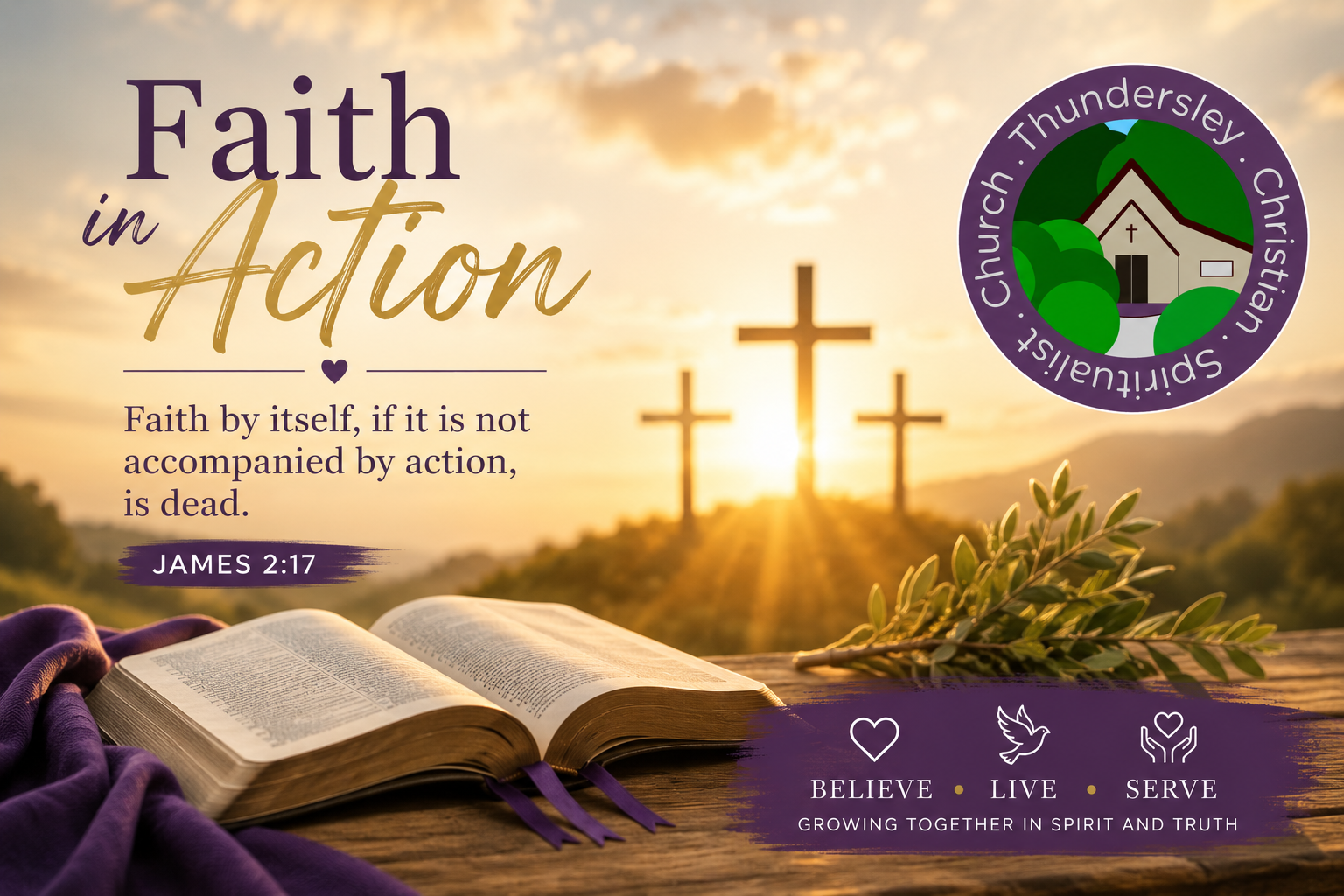
“Faith by itself, if it is not accompanied by action, is dead.”
- James 2:17
Epistle of James
James challenges believers directly. It is not enough to simply say “I have faith” or “I believe”. True faith must be visible through kindness, compassion, generosity, integrity, and service to others. The reading gives the example of someone who sees another person suffering without food or clothing and merely offers kind words without practical help. James asks plainly – what good is that?
This message is deeply relevant in modern life. Spirituality is not merely about belief, attendance at church, or speaking the right words. It is reflected in how we treat people, how we respond to suffering, and how we live our daily lives.
The reading also references Abraham and Rahab as examples of people whose faith became meaningful because they acted upon it. Their trust in God was demonstrated through courage, sacrifice, and decisive action.
Faith, Perseverance and Spiritual Growth
Another important theme from the service was perseverance. Spiritual growth is rarely easy. We all face temptations, distractions, fears, and personal struggles. Yet these challenges are often part of our spiritual learning.
As mentioned during the address, God understands that we are here to learn and evolve. Mistakes are part of the human experience, but faith helps us continue growing. Through perseverance, compassion, and self-awareness, we gradually become more aligned with divine love and purpose.
This message feels especially significant as we approach Pentecost – a time associated with spiritual awakening, inspiration, and the power of Spirit moving among humanity.
Bringing Faith Into Everyday Life
The closing message of the evening reminded us that faith should never remain passive. Spiritual teachings are intended to be lived.
Acts of kindness, supporting those in need, listening without judgement, offering healing words, forgiving others, and standing up for what is right are all expressions of living faith.
As James teaches so clearly:
“As the body without the spirit is dead, so faith without deeds is dead.”
- James 2:26
Perhaps the challenge for all of us this week is not simply to ask ourselves what we believe, but how we are putting those beliefs into practice.
May we each continue to grow in faith, compassion, and spiritual understanding.
This post was drafted by ChatGPT AI from Peter’s bible reading on 10th May 2026. Edited by humans. The featured image was created by ChatGPT.